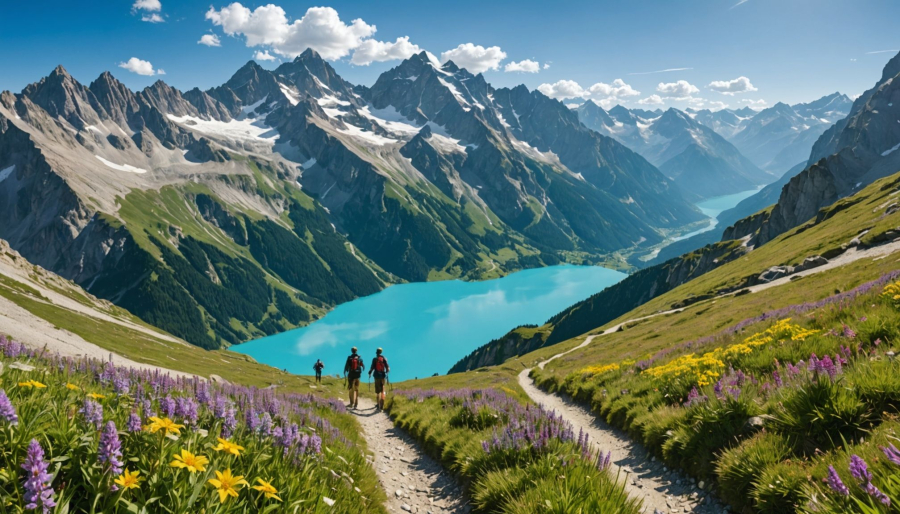
One in three visitors who discover the Mont Blanc massif in summer say they’re amazed by how the landscape transforms when wildflowers blanket the valleys and snow gives way to greenery. The contrast between glacial whites and alpine meadows creates a living canvas unlike anywhere else in Europe. This guide dives into the most rewarding ways to experience the mountain environment beyond the ski season - from panoramic high-altitude rides to quiet forest trails and adrenaline-charged descents. It’s not just about sightseeing; it’s about immersing yourself in a region that pulses with energy, even when the lifts aren’t running.
High-altitude adventures and must-see mountain panoramas
Reaching the top of the Aiguille du Midi at 3,842 meters isn't just a cable car ride - it's a journey into the heart of the Alps. In under 20 minutes, the ascent whisks you from the valley floor in Chamonix to a vantage point where the entire Mont Blanc range unfolds in every direction. On clear days, you can see three countries - France, Switzerland, and Italy - with peaks stretching as far as the eye can reach. The sensation of stepping into open air at that height, especially at the famous Step Into the Void glass platform, stays with you long after you descend.
What makes this experience even more seamless is knowing your transport logistics are sorted. Many travelers arrive after long flights, often with gear or families in tow. That’s where professional alps transfers come in - reliable, punctual, and operated by drivers who know how to navigate high mountain roads with ease. This level of preparedness means you start your alpine day with calm, not stress.
The Aiguille du Midi and Step Into the Void
The Aiguille du Midi cable car is one of the steepest in the world, climbing nearly vertically in parts. Once at the summit, visitors step out into a crisp alpine environment where wind, altitude, and panoramic views demand attention. The Step Into the Void structure - a glass cube extending five meters from the rock face - allows you to stand above a 1,000-meter drop with nothing but glass beneath your feet. It’s not for the faint-hearted, but it’s a powerful reminder of the raw scale of the mountains. For climbers and mountaineers, this is also the starting point to access some of the most legendary routes in the Alps, including the Vallée Blanche descent.
Exploring the Mer de Glace via the Montenvers train
For over a century, the Montenvers train - a vintage red cogwheel railway - has carried visitors up the steep mountainside to face one of the largest glaciers in the French Alps. The 40-minute ride offers ever-expanding views of Chamonix and the surrounding peaks. At the top, a short walk leads to the edge of the Mer de Glace, once much closer to the station but now retreating visibly due to climate shifts. A staircase cut into the ice leads down to an ice cave carved each year, showcasing the glacier’s deep blue interior. The Crystal Gallery nearby displays minerals found in the massif, adding a quiet, reflective moment to an otherwise dramatic landscape.
Active exploration: hiking and trail running trails
Summer in the Mont Blanc region isn’t just about passive sightseeing - it’s a magnet for those who want to move through nature. The network of trails ranges from gentle forest walks to challenging alpine ascents, catering to all fitness levels. Whether you're trail running at dawn or planning a full-day hike with panoramic payoffs, the terrain delivers. Two of the most iconic routes stand out for both accessibility and scenery.
The iconic Lac Blanc hike
Starting from the Flégère cable car station, this trail gains elevation quickly but rewards hikers with one of the most photographed views in the valley. The lake sits at around 2,350 meters, perfectly reflecting the jagged ridgeline of the Aiguille des Posettes and, on clear days, the full massif of Mont Blanc. The hike takes about 1.5 to 2 hours one way and is considered moderate - suitable for most with decent fitness. To avoid crowds, aim for early morning or late afternoon. Midday brings tour groups and families, especially in July and August.
The Tour du Mont-Blanc (TMB) essentials
The full TMB spans approximately 170 kilometers and crosses three countries over 10 to 12 days. But you don’t need to commit to the entire loop to experience its magic. Several sections - like the stretch from Les Contamines to Col du Bonhomme or Champex to Trient - are ideal for day hikes. These segments offer the same alpine grandeur: flower-filled meadows, mountain refuges serving local dishes, and the constant presence of high peaks. For those wanting to lighten the load, luggage transfer services are available and widely used, allowing hikers to walk unburdened while gear moves ahead to the next stop.
- Sturdy hiking boots with ankle support - essential on rocky or uneven terrain
- Layered clothing - temperatures can shift rapidly at altitude
- Sun protection - hat, sunglasses, and high-SPF sunscreen due to intense UV exposure
- Hydration pack or water bottles - refill points exist but aren’t frequent
- Physical topo map or offline GPS - phone signal drops in remote areas
Comparing summer sport intensities for every thrill level
Not all alpine adventures require the same level of fitness or nerve. Understanding the physical and mental demands of each activity helps match the experience to your comfort zone. Whether you're traveling with kids, friends, or solo, knowing what to expect makes planning easier. Below is a comparison of three popular summer pursuits based on adrenaline, duration, and difficulty.
Aerial and water-based thrills
Paragliding from takeoff points near Planpraz or Brévent offers a bird’s-eye view of the entire Chamonix valley. Tandem flights last about 20 to 40 minutes and require no prior experience - just the willingness to run off a slope and trust the glider. On the water, white-water rafting on the Arve River delivers splashes and thrills, especially in June and early July when snowmelt increases flow. Both are accessible to beginners, but they engage different senses: paragliding is about silence and perspective, rafting about teamwork and energy.
| Activity | Adrenaline Level | Average Duration | Difficulty (out of 5) |
|---|---|---|---|
| Paragliding (tandem flight) | 4 | 0.5-1h | 2 |
| Mountain Biking (Valley trail) | 3 | 2-4h | 3 |
| Hiking (Lac Blanc trail) | 2 | 3-4h | 3 |
Major interrogations
Are the glaciers still accessible in the middle of August?
Yes, glaciers like the Mer de Glace remain accessible during peak summer, though the path to reach them has changed. Each year, the ice retreats further, requiring more stairs or boardwalks to bridge the gap between the station and the glacier. The ice cave is carved anew every spring, so it’s maintained for visitors. However, conditions vary - some years see more melt, making access shorter or less dramatic. Guides monitor safety closely, and paths close if deemed unstable.
Is E-biking becoming the new standard for valley exploration?
E-bikes are increasingly common in the alpine landscape, especially among riders looking to cover more ground without exhausting themselves. They open up high-altitude trails to a wider audience and make return trips easier. However, they’re not allowed on all paths - many hiking and nature trails remain pedal-only. In designated zones, e-biking offers a fun, efficient way to explore, but traditional mountain biking still holds strong among purists.
Is it safe to bring a toddler on the Aiguille du Midi cable car?
There’s no age restriction for the Aiguille du Midi cable car, and many families bring young children. However, the rapid ascent to over 3,800 meters can cause discomfort due to pressure changes - similar to flying. Babies may cry, and toddlers might feel uneasy. The summit is very windy and cold, so proper clothing is a must. For safety, keep a firm hold in exposed areas, and be mindful that emergency help is limited at that altitude.
When is the optimal window to witness the alpine flora in full bloom?
The peak bloom for alpine flowers typically runs from late June to early August, depending on the season’s snowmelt. Lower meadows start blooming in June, with gentians, edelweiss, and alpine anemones appearing first. Higher elevations, above 2,000 meters, reach their colorful peak in July and early August. The exact timing varies each year - a late snow year pushes the bloom later. For the best displays, target mid-summer and explore trails between 1,800 and 2,500 meters.
